Review the history
Record dates, affected fixtures, previous clearing methods, and how long each result lasted.
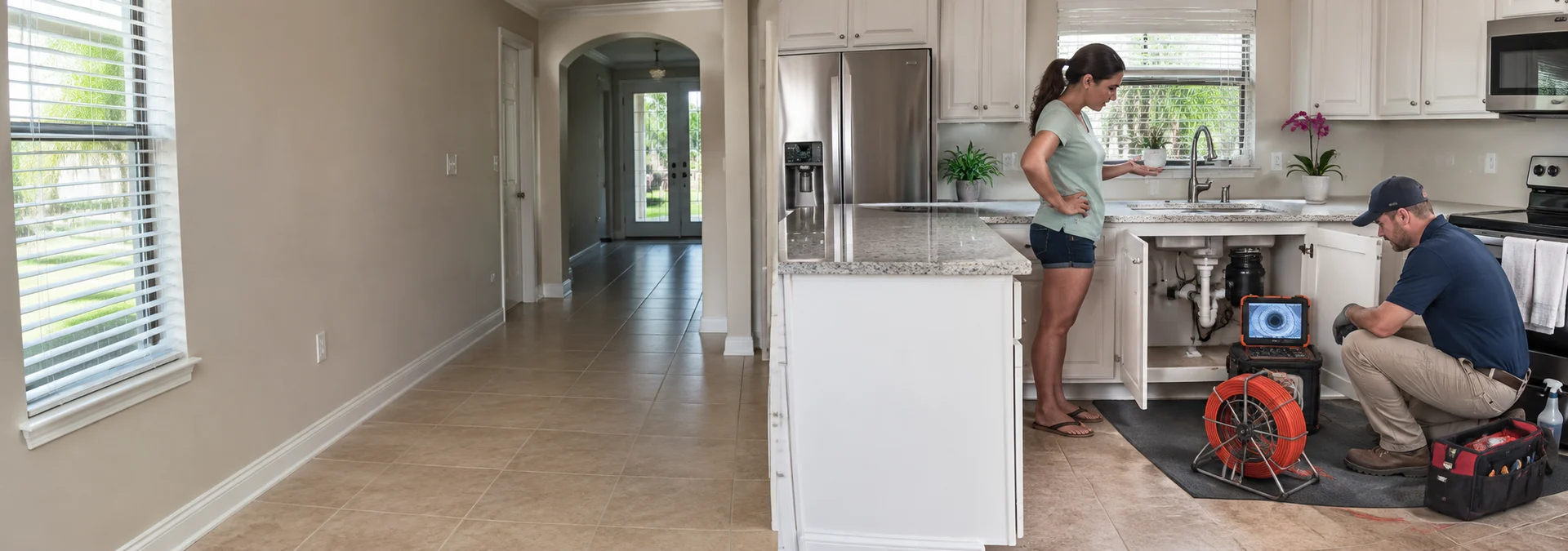
A recurring clogged drain, blocked sewer line, or main sewer line clog deserves more than repeated clearing. A camera inspection after the line is open may show why the sewer blockage returns.
Keep the dates of previous visits and ask whether the same distance from the access point was involved. A recording is more useful than a description that simply calls the pipe old.
Compare maintenance and repair against the actual finding. If a localized opening admits roots, ask why a spot repair would or would not solve it before accepting a full replacement.
Returning clogs can involve roots, scale, a low section, an offset or other damage. Cleaning may reopen the line, but a camera inspection after cleaning helps determine why it does not stay clear.
A clogged sewer line that blocks again after clearing may still contain roots, grease, scale, or debris, or it may have a structural condition that catches material. Common examples include an offset joint, rough deteriorated pipe, a sewer belly that holds solids, or a partially collapsed section.
Track how quickly the clog returns and which fixtures are involved. Once flow is restored, inspection can help separate a maintenance problem from pipe damage that needs repair.
Record dates, affected fixtures, previous clearing methods, and how long each result lasted.
Select equipment suited to the access, pipe material, diameter, and suspected obstruction.
Run a camera when the line is open enough to show joints, grade, roots, buildup, and damage.
Compare maintenance, deeper cleaning, root control, spot repair, lining, or replacement based on findings.
Material remains or regrows because the pipe is not fully cleaned or has an opening.
A low section holds water and solids instead of carrying them downstream. A camera can show visible interior changes, while locating and site evaluation help establish where the defect sits and how far it extends. The length and condition of pipe beyond the defect matter when comparing a spot repair with replacement.
Offsets, cracks, corrosion, or collapse can snag paper and waste. Weather, grading, irrigation, and buried plumbing can create similar surface patterns. Note whether the area stays wet during dry conditions and locate the nearby systems before excavation.
The original material may not have been fully removed, roots or grease may return, or a pipe defect may continue catching solids. Inspection after clearing can help identify the pattern.
Not automatically. Some lines need better cleaning or a targeted repair. Replacement becomes more likely with widespread deterioration, collapse, poor grade, or several failures.
They solve different conditions. Cable equipment can open and cut through certain blockages, while jetting may clean more of the pipe wall. Access and pipe condition determine what is appropriate.
There is no single interval. A useful schedule depends on the cause, pipe condition, rate of return, property use, and whether a repair would be more practical than repeated service.
Whole-home slow drainage often points beyond a single fixture trap.
Explore →SEWER PROBLEMSeveral fixtures backing up together can point to a main sewer restriction.
Explore →SEWER PROBLEMBubbling sounds may signal trapped air from a blockage, vent issue, or main-line restriction.
Explore →See the line from the inside and pinpoint roots, cracks, offsets, and sewer blockages.
Explore →SERVICEHelp for clogged drains, slow fixtures, and recurring main sewer line blockages.
Explore →SERVICEInspection and cleaning plans for lines with recurring trouble or known risk factors.
Explore →