Notice the pattern
Check whether pressure changed at one fixture or throughout the home, and note whether the change was sudden or has been getting worse.
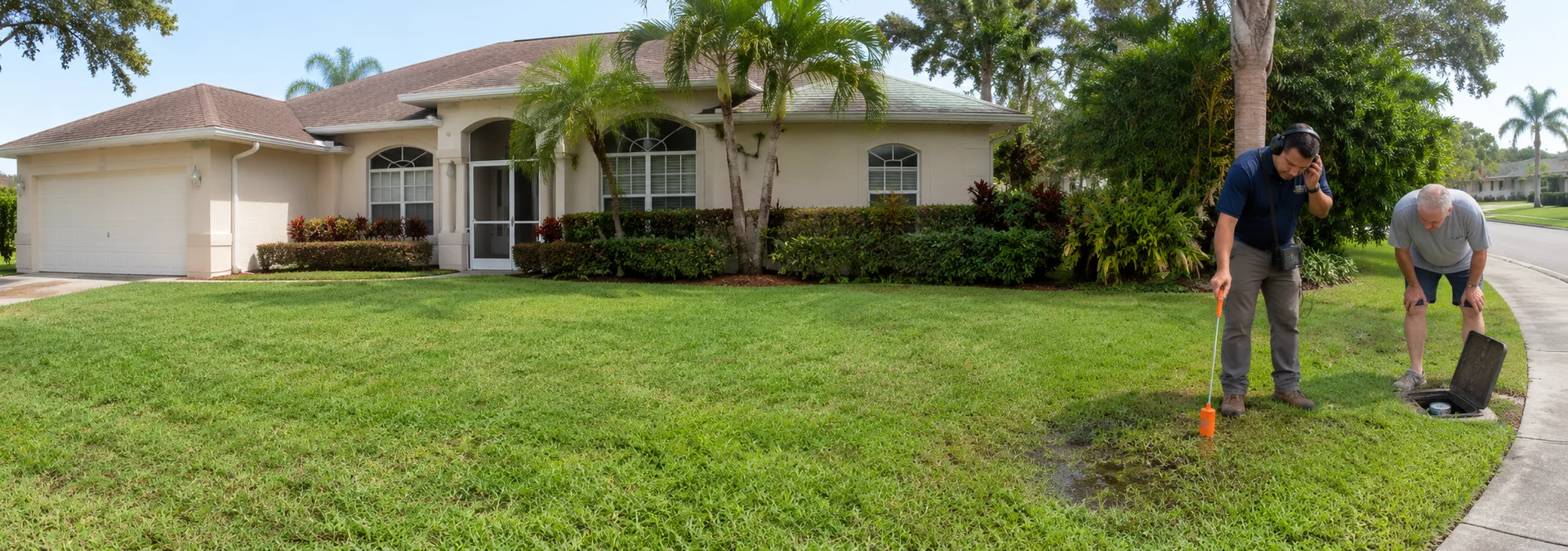
A damaged water service line may cause low pressure across the home, unexpected water use, a persistently wet spot, or water flow when every fixture is off. These symptoms are clues, not proof: a plumbing fixture, interior pipe, irrigation leak, pressure regulator, or utility-side problem may look similar. The water service line brings fresh water in; the sewer lateral carries wastewater out, so the two problems need different checks.
Check when the symptom occurs and tell the provider whether irrigation or indoor fixtures were running. A pressure complaint and a sewer backup call for different diagnostic paths.
Ask where the leak has been located and whether the repair is on the private service or provider equipment. The written proposal should include connection work and any affected hardscape.
Unexplained water use, wet ground or changing pressure may indicate a supply problem, but fixtures and irrigation can cause similar symptoms. Confirm the source with appropriate testing before excavating a service line.
Common signs of a damaged water service line include a sudden or persistent drop in pressure at several fixtures, a water meter registering flow when no water is being used, an unexplained increase in water use, or a wet area that remains after rain and irrigation are ruled out. A faint sound of running water when fixtures are off can also be a reason to investigate.
None of these symptoms confirms a buried line leak on its own. A fixture, interior pipe, pressure-regulating valve, irrigation system, or utility-side interruption can create similar signs. Remember that a water line supplies the home while a sewer line removes wastewater: a supply-line leak usually does not cause sewage to back up into a drain.
Check whether pressure changed at one fixture or throughout the home, and note whether the change was sudden or has been getting worse.
Turn off fixtures and water-using appliances. If the meter is accessible, follow the water provider’s instructions to see whether it continues registering flow.
Look for a wet area that persists during dry weather, and rule out irrigation, downspouts, recent utility work, and natural low spots.
Ask the water provider about interruptions or the public-side service, and arrange a plumbing or service-line evaluation before planning excavation.
A failed section, joint, or connection can lose treated water before it reaches the home. The leak may stay underground or appear as persistent wet ground.
Older materials and deteriorated connections can become more vulnerable to leaks. The pipe material and condition need to be confirmed before selecting a repair.
A pressure regulator, shutoff valve, fixture, water heater, or interior pipe can affect service and may be mistaken for a buried water-line failure.
Sprinklers, runoff, groundwater, or utility work can cause wet ground or a temporary pressure or water-quality change without a private service-line break.
Watch for low pressure at multiple fixtures, unexplained water use, meter flow while water is off, a persistent wet spot, or the sound of water running when fixtures are closed. Each sign can have causes other than a buried leak, so confirm the source before repair.
Usually no. The water service line supplies clean water to the home; the sewer lateral carries wastewater away. A water leak may create wet ground, but a drain backup points to a separate wastewater or plumbing issue.
It can, especially when the pressure change affects several fixtures, but a valve, regulator, interior plumbing, or utility issue may be responsible. A pressure check and line evaluation can narrow it down.
It can increase metered water use even if the leak is underground. Check for running fixtures and follow the utility’s directions for checking the meter; continuous flow when all uses are off is a reason to investigate.
The responsible party depends on local utility rules and the point where public service ends and private service begins. Contact the water provider to confirm the boundary before arranging private repair.
If water is actively entering the building and you can safely reach the home’s main shutoff, turning it off can limit damage. If water is near the meter or in the street, contact the water provider and do not operate utility-owned equipment.
Sometimes, depending on the route, material, condition, access, soil, and local requirements. A provider must evaluate the service line to determine whether a trenchless method is suitable.
Not necessarily. Discoloration may come from interior plumbing or temporary changes in the public system. Contact the water provider if the change is sudden or widespread, and have recurring discoloration assessed.
A repair may fit a single localized leak in otherwise serviceable pipe. Repeated leaks or widespread deterioration can make replacement more practical, but the decision should follow inspection and confirmation of the line’s ownership.